
Williamsburg, VA attracts visitors year-round — from Colonial Williamsburg tourists and College of William & Mary families to the steady flow of travelers passing through the Historic Triangle. That constant flow of people and luggage creates conditions that make bed bug exposure a real and recurring concern for Williamsburg homeowners and residents. If you've found signs of bed bugs in your home, or you're returning from travel and want to know what to watch for, here's what you need to know about bed bug treatment options in Williamsburg and why an early professional inspection is the most cost-effective step you can take.
At Commonwealth Pest, we provide professional bed bug control in Williamsburg, VA and throughout the Hampton Roads and greater Virginia Peninsula area. We've seen firsthand how quickly a small bed bug problem can expand — and how much easier it is to resolve when caught early.
Why Williamsburg Residents Are at Higher Risk for Bed Bugs This Summer
Bed bugs don't travel on their own — they hitchhike. Every piece of luggage set on a hotel bed, every used piece of furniture purchased from a secondhand shop, and every guest who stays in a home is a potential vehicle for bed bugs to enter a new environment. In a city as heavily visited as Williamsburg, these exposure opportunities are significantly higher than in less traveled communities.
The Colonial Williamsburg area hosts millions of visitors annually. Busch Gardens, Water Country USA, and the surrounding hotel corridors see peak occupancy every summer. When visitors stay in multiple properties during a trip, bed bugs can be unknowingly transported from one lodging to the next — and ultimately back home with the traveler.
Summer also represents peak season for Williamsburg's rental market. Property managers overseeing vacation rentals and short-term accommodations face elevated turnover between guests, which increases the risk of an infestation going undetected between cleaning cycles.
College move-in and move-out periods add another exposure window. Furniture moved into and out of dormitories and rental housing near William & Mary, as well as secondhand furniture purchases that are common during these transitions, are documented pathways for bed bug introduction.
Early Warning Signs of a Bed Bug Infestation
Bed bugs are small, flat, and skilled at avoiding detection during daylight hours. Knowing what evidence to look for is more reliable than expecting to see the insects themselves during a casual inspection.
Bite marks — Bed bug bites typically appear as small, red, itchy welts, often arranged in a line or cluster pattern on exposed skin — arms, shoulders, neck, and legs are most common. Not everyone reacts to bed bug bites, and those who do may not show reactions immediately, making bites an unreliable sole indicator. However, unexplained bite patterns that appear after sleeping are worth investigating.
Blood stains on bedding — Small rust-colored stains on sheets, pillowcases, or mattress covers result from bed bugs being crushed during sleep or from minor bleeding at bite sites. These stains are often one of the first signs homeowners notice.
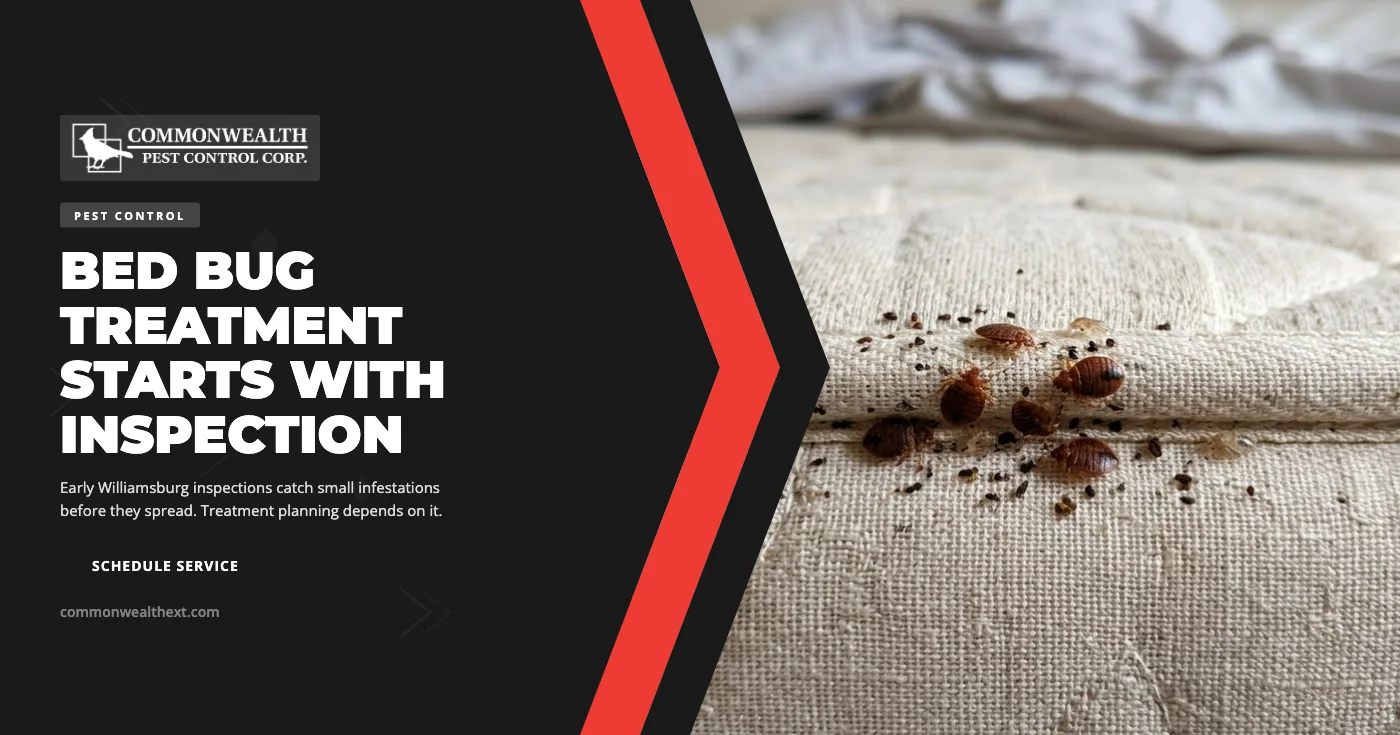
Fecal spots — Bed bug excrement appears as tiny dark spots, roughly the size of a pen tip, and bleeds into fabric similar to a marker stain. Check the seams of the mattress, along the box spring edges, and the headboard. Fecal spotting in multiple areas suggests an established infestation rather than a newly introduced one.
Shed skins (exuviae) — Bed bugs shed their exoskeleton five times before reaching adulthood. Finding these translucent, hollow casings in mattress seams, behind headboards, or inside electrical outlets and wall plates indicates bed bugs have been present for at least several weeks.
Live insects — Adult bed bugs are oval, flat, and about the size of an apple seed, reddish-brown before feeding and darker after. They're most active between 2 and 5 AM and typically retreat to harborage areas by dawn. Finding live insects during a daytime inspection is most likely in heavily infested rooms.
What a $100 Bed Bug Inspection Covers
A professional bed bug inspection is not the same as a quick visual sweep of the bedroom. A trained technician systematically examines the areas where bed bugs are most likely to harbor, using equipment and knowledge that significantly exceeds what a homeowner can do independently.
Our $100 bed bug inspection at Commonwealth Pest covers a thorough examination of all sleeping areas in the home. This includes the mattress and box spring (top, bottom, and all seams), the bed frame and headboard, nearby furniture including nightstands and dressers, baseboards and wall outlets adjacent to sleeping areas, and luggage storage areas if recently traveled.
The inspection produces a written assessment of what was found, where evidence was located, and a recommended treatment approach matched to the severity of what we observe. If no evidence is found, you have confirmation and peace of mind. If bed bugs are present, you have a baseline from which to plan treatment — and the earlier that treatment starts, the smaller the infestation to eliminate.
For Williamsburg residents who've recently returned from travel, an inspection is particularly worthwhile if you stayed in multiple hotels or if you're noticing unexplained bites or staining on bedding.
How Chemical Bed Bug Treatment Works
Professional chemical treatment for bed bugs uses a combination of insecticide classes applied strategically to targeted areas — not broadcast sprayed across entire rooms. The goal is to eliminate live bugs and eggs in their hiding locations while avoiding unnecessary product dispersal in living spaces.
Residual insecticides are applied to harborage areas — mattress seams, bed frames, baseboards, furniture joints, and the perimeter of rooms. These products remain active for weeks after application, killing bed bugs that emerge and make contact with treated surfaces after the initial application. Because bed bug eggs are more resistant to insecticides than adults, residual activity is essential for reaching newly hatched nymphs.
Contact insecticides provide immediate knockdown of live bugs encountered during treatment. These products kill on contact and are applied directly to areas where active infestation is confirmed.
Dust formulations applied to wall voids, electrical outlets, and other confined harborage areas provide long-lasting control in locations where liquid products can't be reliably applied. Bed bugs that shelter inside walls or behind electrical plates are reached through this application method.
Most chemical treatment protocols require a follow-up application 14 to 21 days after the initial treatment. This follow-up is critical — it addresses any newly hatched nymphs that emerged after the first treatment. Skipping the follow-up is the most common reason bed bug treatments fail to fully resolve infestations.
What to Expect During and After Treatment
Preparing your home properly before a bed bug chemical treatment is essential for it to work effectively. Our technicians provide a detailed preparation checklist when you schedule treatment. Key preparation steps typically include washing all bedding, clothing, and fabrics in the highest heat setting and placing them in sealed bags until after treatment, removing clutter from sleeping areas and adjacent rooms, and vacuuming mattresses and furniture before the technician arrives.
During treatment, residents and pets should vacate the home for 4 to 6 hours to allow product application and initial drying. After returning, treated surfaces should not be wiped down or washed — the residual insecticide needs to remain on surfaces to be effective against emerging nymphs.
In the weeks following treatment, you may still observe bed bug activity — this is normal and expected. Disturbed bugs may become more visible as they attempt to avoid treated areas, and newly hatched nymphs may emerge. A follow-up inspection and application at the 2-to-3-week mark addresses this secondary activity. Most infestations respond fully to two properly timed applications, though severe cases may require additional treatment.
Tips to Prevent Bed Bugs When Traveling or Hosting Guests
Prevention is significantly less disruptive and less expensive than treatment. For Williamsburg residents who travel frequently or host guests, a few consistent habits reduce exposure meaningfully.
When traveling — Inspect the mattress seams, headboard, and nearby furniture for bed bug evidence before unpacking in any hotel room. Keep luggage on a luggage rack away from the bed and walls rather than on the floor or bed. When you return home, inspect luggage outside and launder all clothing immediately, including items not worn during the trip.
When purchasing secondhand furniture — Avoid bringing used mattresses, box springs, or upholstered furniture into your home without a professional inspection first. Bed bugs survive for months without feeding, meaning furniture that appears clean can harbor an active infestation. Thrift store clothing purchases should be washed on high heat before use.
When hosting guests — Have guests keep luggage in a sealed area — a bathroom or laundry room — away from sleeping areas. After guests depart, inspect the guest room bedding and mattress seams. Washing all guest bedding on high heat before storage is good practice.
With landlord communication — If you rent in Williamsburg, a bed bug infestation in an adjacent unit represents a risk for your unit as well. Virginia law requires landlords to address bed bug infestations, and tenants have a right to request inspection if they suspect a problem.
If you've found signs of bed bugs in your Williamsburg home or want a professional inspection following recent travel, contact Commonwealth Pest. Our bed bug control services in Williamsburg, VA are backed by professional-grade chemical treatments and a structured follow-up protocol designed to resolve infestations fully.