
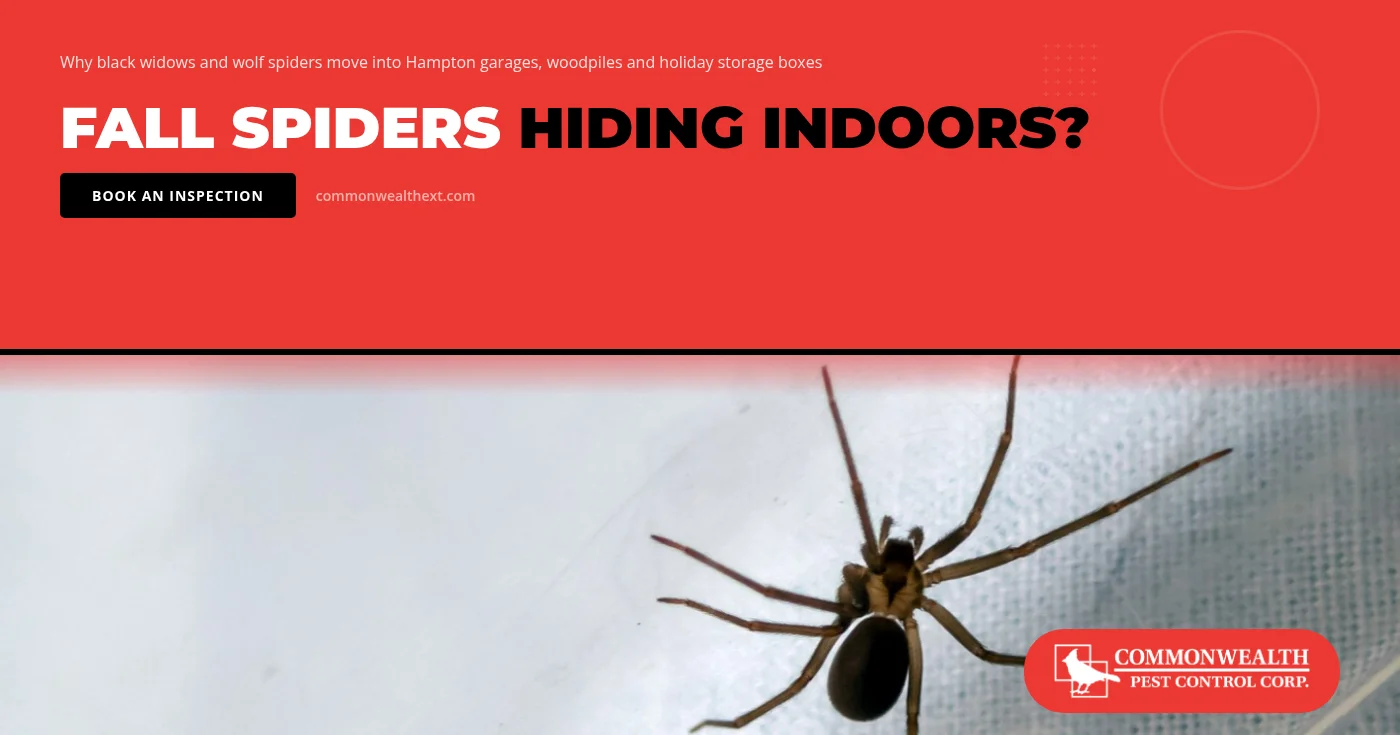
You lift the lid on a box of holiday lights in the garage, and a dark, leggy shape darts into the shadows. That moment is a big reason searches for spider control Hampton VA climb every November. The questions are almost always the same: why are spiders in my garage now, and is this one dangerous?
Here in Hampton, the timing makes sense. Our humid coastal climate keeps insects active well into fall, and this is the season when garages fill up with firewood, patio furniture and boxes pulled down from the attic. Add the steady stream of military moves near Joint Base Langley-Eustis, and many homes have stacks of cardboard sitting untouched for months. That’s exactly the kind of quiet, dark shelter spiders love.
Here at Commonwealth Pest, we’ve helped Peninsula families with spiders, moisture and the insects that feed them since 1999. Below, we’ll cover why fall spiders show up, how to tell the common species apart, where they hide, how to check holiday boxes, and the sealing and moisture steps that keep them from coming back.
Why Hampton Spiders Move Indoors Once November Arrives
It’s a popular belief that spiders come inside to escape the cold. The reality is a little different. Many of the spiders you find indoors were born inside and have lived quietly in wall voids, basement corners or the garage for their whole lives. What changes in fall is how often you see them.
Two things happen this time of year. First, adult males of several species start wandering in search of mates, and those travels carry them under doors, across floors and into bathtubs where you finally notice them. Second, outdoor spiders follow their food. Moths, crickets and beetles gather around porch lights and warm foundations as nights cool, and the spiders that hunt them come along for the meal.
Our coastal weather stretches that season out. November highs here often sit in the 60s, and the first frost can arrive later than it does farther inland, so insects and the spiders eating them stay active longer. Hurricane season also ends on November 30, and many yards still hold storm debris, stacked lumber or piled patio items that make ideal hiding spots.
According to Virginia Cooperative Extension, most spiders around Virginia homes are harmless and even helpful, since they eat insects. The goal isn’t to fear every spider; it’s to understand why they’re gathering and make your home less inviting.
The Fall Spiders Homeowners See Most: Wolf Spiders, House Spiders and Southern Black Widows
Many spider species live in Virginia, but three account for most of the fall calls we get. Knowing which one you’re looking at helps you decide whether to grab the vacuum or call for help.
Wolf Spiders
Wolf spiders are large, hairy, brown-to-gray hunters that run along the ground instead of building webs. Females carry a round egg sac on their spinnerets, and newly hatched spiderlings ride on her back. Finding wolf spiders in the house is one of the most common fall complaints in Virginia, but they aren’t considered dangerous to people. A bite is uncommon and feels much like a bee sting.
Common House Spiders
The common house spider builds the messy, tangled cobwebs you find in garage corners, window frames and behind shelving. It’s small, brownish and harmless. Its brown, pear-shaped egg sacs often hang right in the web, so a few spiders can become many when storage areas go undisturbed.
Southern Black Widows
Southern black widow spiders in Hampton Roads deserve real respect. The female is glossy black with a red hourglass on the underside of her abdomen. She prefers woodpiles, sheds, meter boxes, the undersides of outdoor furniture and boxes that haven’t been opened in months. Her egg sacs are round and tan to papery white. Bites are rare and usually happen when someone reaches blindly into a box or slides on a pair of garden gloves. The venom affects the nervous system, so anyone bitten, especially a child or older adult, should get medical care promptly.
Garages, Sheds and Firewood Stacks: The Hidden Spider Hotspots Around Your Home
If spiders had a favorite address, it would be the spaces we visit least. These areas offer shelter, steady insect traffic and plenty of undisturbed corners.
Spiders in the Garage
Spiders in garage spaces are usually there for easy entry and easy food. Garage door seals crack with age, and overhead lights draw insects after dark. Clutter along the walls creates the quiet corners black widows and house spiders prefer. To make your garage less inviting:
- Replace a worn garage door bottom seal and side weatherstripping.
- Move stored items onto shelving, off the floor and away from walls.
- Swap cardboard for plastic bins with tight-fitting lids.
- Vacuum corners, webs and egg sacs regularly.
- Place sticky traps along walls to monitor activity.
Sheds and Woodpiles
Stacked firewood is a classic black widow hiding spot. Keep it at least 20 feet from the house, raised off the ground on a rack. Bring in only what you’ll burn that day, wear thick gloves when handling it, and never spray pesticides on wood you plan to burn. In the shed, shake out gloves, boots and tools before using them.
Unpacking Holiday Decorations With Care: How to Check Boxes for Spiders and Egg Sacs
Holiday storage checks every box on a spider’s wish list: dark, quiet and left alone most of the year. Spiders in holiday decoration boxes are especially common when those boxes are cardboard and stored in a garage, shed or attic. Before the decorating marathon starts, work through each container:
- Move boxes into a well-lit area, such as the driveway or an open garage.
- Put on thick gloves. This is the single best way to avoid a black widow bite.
- Open lids slowly and look before you reach, checking folds, corners and the bottom.
- Lift out wreaths, garlands and tangled light strands one at a time and shake them gently outdoors.
- Look for egg sacs: round and tan or papery white for black widows, brown and pear-shaped for house spiders.
- Vacuum webs and sacs, then seal the bag or canister contents and place them in the outdoor trash.
- When the season ends, repack everything in sealed plastic bins instead of cardboard.
Finding several black widows or multiple egg sacs in one area suggests an established population nearby. That’s a good time to have a professional take a look before you haul the rest of the boxes inside.
How Crawl Space Moisture and Insect Prey Keep Spiders Coming Back
People often ask us whether crawl space moisture problems attract spiders. Indirectly, yes. Damp crawl spaces draw crickets, silverfish, sow bugs and other insects, and spiders settle in to feed on them. Standing water, wet insulation or high humidity turns a crawl space into a buffet.
That’s a familiar story in low-lying, humid neighborhoods near the water, where many homes sit over crawl spaces. Moisture also softens wood, invites wood-destroying insects and can encourage mold and fungus, so a spider problem is often a symptom of something bigger.
Here at Commonwealth Pest, we look at the whole picture. Our crawl space moisture control work, including vapor barriers, dehumidifier installation and drainage improvements, removes the conditions that keep insects and spiders coming back. Because we’re also a licensed contractor, our team handles structural repair for moisture-damaged sill plates, joists and subfloors, so you don’t have to coordinate a second company. Fixing the root cause does far more for long-term results than spraying alone.
Sealing Gaps and Entry Points Before Winter: A Science-Based Approach to Spider Prevention
Our technicians are trained through the Virginia Tech Entomology Department and the Virginia Pest Management Association, and we follow Integrated Pest Management (IPM). In plain terms, IPM uses biology and inspection to guide targeted treatment instead of heavy chemical use. For spiders, that starts with exclusion and fewer prey insects.
Before winter, walk around your home and look for:
- Gaps under exterior and garage doors, which door sweeps usually fix.
- Openings around pipes, cables, dryer vents and utility lines; seal them with caulk or foam.
- Torn window screens and damaged crawl space or attic vent screens.
- Mulch, ivy and shrubs touching the foundation or siding.
- Bright white porch lights; yellow or LED bulbs attract fewer insects.
What about peppermint oil, vinegar or chestnuts? The evidence that these repel spiders is weak and mostly anecdotal, so we don’t recommend relying on them. Sealing, decluttering and reducing insects are far more dependable. When treatment is needed, we focus on perimeter areas and harborage points rather than blanket spraying, with families and pets in mind.
When to Call a Professional for Spider Control in Hampton, VA
A stray wolf spider in the laundry room doesn’t require a service call. These situations, though, are worth professional help:
- You’re finding black widows in the garage, shed, woodpile or storage boxes, especially with kids or pets at home.
- You see spiders daily or find multiple egg sacs.
- Webs keep reappearing in the same spots after cleaning.
- You’re noticing crickets, roaches or other insects that point to a larger prey problem.
- You suspect crawl space moisture or wood damage.
Every visit starts with a free inspection. We identify the species, find where spiders are getting in and what they’re eating, and build a plan around what we find. That can include targeted perimeter treatment, web and egg sac removal, exclusion recommendations and, when moisture is driving the problem, crawl space solutions. If you want a spider exterminator who also understands the structure of your home, that combination is where we stand apart.
Frequently Asked Questions About Fall Spider Control in Hampton
Are black widows common in Hampton, and are their bites dangerous?
Southern black widows are native to Virginia and turn up regularly in garages, sheds and woodpiles. Bites are rare, but the venom can cause pain, muscle cramps and other symptoms. The CDC’s guidance on venomous spiders recommends seeking medical attention after a bite.
Are wolf spiders poisonous?
Like nearly all spiders, wolf spiders have venom, but they aren’t considered a medical threat to people. Their size and speed are more startling than harmful.
Do we have brown recluse spiders in this area?
Brown recluses are generally not believed to be established in coastal Virginia, and most reported sightings turn out to be other brown spiders. If you’re unsure, keep the spider in a sealed container and we’ll help identify it.
Will spraying alone stop spiders?
Usually not for long. Spiders return wherever shelter and insects remain. Lasting results come from pairing targeted treatment with sealing, decluttering and moisture control.
Book Fall Spider Control in Hampton Before Decorating Season
Fall spiders are a normal part of coastal living, but they don’t need to join your holiday decorating. Careful box checks, a tidier garage, a woodpile moved away from the house and a few door sweeps go a long way. When black widows, recurring webs or crawl space moisture enter the picture, professional help makes the difference.
Commonwealth Pest is a second-generation, family-owned business that has served the Peninsula from our Newport News home base since 1999. For spider control Hampton VA families can count on, contact us to schedule your free inspection, and head into the holidays with peace of mind.
How Do We Keep Spiders Out of Your Garage, Shed and Holiday Storage This Fall?
Every November, we see the same pattern: spiders settle into garages, sheds, woodpiles and the cardboard boxes that hold your holiday decorations. Most are harmless, but black widows love those same dark, quiet corners. Our approach goes beyond a quick spray, because spiders keep coming back wherever shelter and insect prey remain.
When you call us, we start with a free inspection and build a plan around what we find:
- Species identification so you know whether you’re dealing with wolf spiders, house spiders or black widows.
- Targeted perimeter treatment focused on harborage points, not blanket spraying.
- Web and egg sac removal in garages, sheds and storage areas.
- Exclusion recommendations for door sweeps, weatherstripping and gaps around utility lines.
- Crawl space moisture solutions that cut down on the insects spiders feed on.
Our technicians are trained through the Virginia Tech Entomology Department and the Virginia Pest Management Association, and we follow Integrated Pest Management principles. Because we’re also a licensed contractor, we can repair moisture-damaged wood in your crawl space instead of sending you to a second company. As a second-generation, family-owned business serving the Peninsula since 1999, we treat every home the way we’d want ours treated.
Want the full breakdown of where fall spiders hide and how to check your decoration boxes? Read our complete guide to fall spider control.